


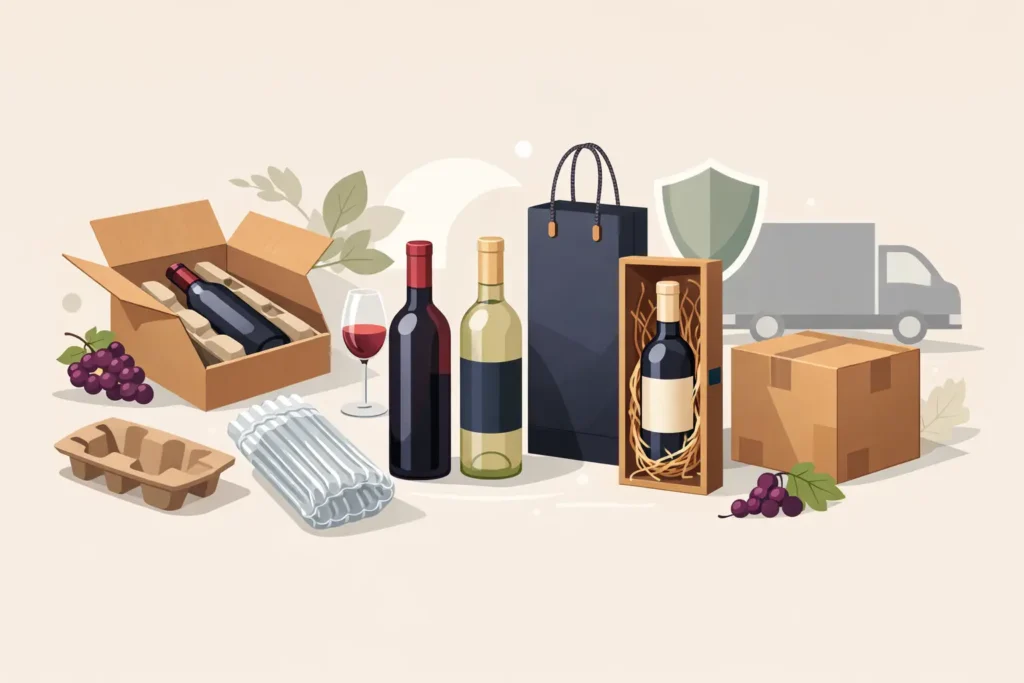
A bottle only has to break once in transit to turn packaging from an afterthought into a real cost. Good wine packaging does two jobs at the same time – it protects a fragile product and helps it arrive looking worth buying. If you sell wine, ship wine, store wine, or hand it over at a cellar door, the right packaging matters to margins, presentation, and customer confidence.
The catch is that there is no single best solution for every bottle or every business. A winery sending mixed orders to online customers needs something different from a retailer packing gift purchases, and both have different needs again from a wholesaler moving cases into storage. That is where practical packaging choices make a difference.
What good wine packaging needs to do
At a basic level, wine bottles are heavy, breakable, and awkwardly shaped. Glass puts weight pressure on the base, the neck is vulnerable to impact, and labels can scuff easily if bottles shift in transit. Add courier handling, stacking pressure, and temperature changes, and weak packaging gets exposed fast.
Good wine packaging needs enough strength for the load, the right fit for the bottle, and protection against movement inside the box. If the fit is too loose, bottles knock together. If the box board is too light, the carton can fail from the bottom. If the insert is poorly matched, it may protect the middle of the bottle but leave the neck or base exposed.
Presentation also matters. For retail and gifting, the packaging needs to look clean and intentional. For ecommerce, it needs to arrive in good condition without using more material than necessary. For warehouse and wholesale use, it should stack well, be easy to identify, and hold up through handling.
Wine packaging for shipping is not the same as wine packaging for display
This is where businesses often lose money. They use a nice-looking gift box for courier freight, or they use a heavy-duty shipper when a simple presentation carton would do. Both cost more than they should, just in different ways.
Shipping cartons need performance first. That usually means corrugated boxes with bottle dividers, inserts, or dedicated wine shipper formats that stop glass-to-glass contact and spread impact. A bottle traveling across town by courier still needs protection, because most damage happens during handling, not distance.
Display and retail packaging can be lighter if the bottle is not going through a freight network. Single bottle gift boxes, window cartons, and carry packs are more about shelf appeal and handover. They still need to fit properly, but they do not need to be built like a transit carton unless they are doing both jobs.
For many businesses, the answer is a two-part system: protective transit packaging for freight and cleaner presentation packaging for in-store sales, events, or gifting. It depends on where the bottle is going and how many times it will be handled before it gets there.
Choosing the right bottle pack format
Single bottle packaging works well for gifts, premium presentation, and small direct orders. It is simple to handle and easy to brand, but unit costs are usually higher, and it is less efficient for bulk movement.
Two-bottle and three-bottle packs are common for gifting and mixed purchases. These formats need careful internal support because partial loads can create uneven weight distribution. If bottles can move inside the carton, breakage risk climbs quickly.
Six-bottle and twelve-bottle cartons are the workhorses for wineries, retailers, and distributors. They make better use of freight space and are easier to palletize or store. The trade-off is weight. Once the bottle count goes up, carton quality matters more, and dividers or inserts stop being optional.
Magnum and specialty bottle packaging is its own category. Taller bottles, wider shoulders, or heavier glass can make a standard carton a poor fit. If the bottle shape is unusual, forcing it into stock packaging often creates more damage risk than savings. This is one of those cases where a custom size can be the cheaper decision in the long run.
Why inserts and dividers matter
A strong outer carton helps, but internal protection is what keeps bottles from colliding. Dividers create separation, inserts lock the bottle in place, and both help distribute shock through the pack instead of into the glass.
Cardboard dividers are a practical choice for many businesses because they are affordable, easy to assemble, and work well for multi-bottle cartons. They also help keep labels from rubbing against each other, which matters when presentation counts.
Fitted inserts can offer more protection for ecommerce shipping, especially for smaller order quantities or premium bottles. The main thing is matching the insert to the bottle and carton dimensions. A good insert in the wrong-sized box still leaves room for movement.
There is also a labor factor. Some protective systems are excellent in transit but slow to pack. If your team is sending dozens or hundreds of orders a week, packaging speed matters. The best option is not always the most engineered one. It is the one that protects the product without slowing the whole packing line down.
Material strength and load are easy to underestimate
Wine is heavy enough that board grade matters. A carton that looks fine when empty can fail once packed, especially if it is lifted from the bottom, stacked in storage, or exposed to rough freight handling. This is why choosing by dimensions alone is risky.
If you are packing multiple bottles, think about the full load, not just the bottle count. A six-bottle carton of standard table wine carries very different weight from six heavy glass premium reds. Add inserts, tape, and handling pressure, and the packaging spec starts to matter.
This is also where cheap packaging can get expensive. Saving a small amount per carton means very little if split seams, crushed corners, or damaged bottles lead to claims, replacements, or lost customers. Practical buying is about total cost, not just unit price.
Custom wine packaging makes sense sooner than most businesses think
Custom packaging is often treated like a large-brand option, but it can be useful for smaller wineries, bottle shops, subscription sellers, and event businesses too. If your bottle size is unusual, your shipping damage is recurring, or your presentation needs to work harder, stock cartons may not be the best fit anymore.
Custom wine packaging can solve several problems at once. It can improve fit, reduce filler use, speed up packing, and give the customer a cleaner branded experience. Printed cartons or carry packs can also turn plain packaging into shelf-ready or gift-ready packaging without needing huge volumes.
The main trade-off is planning. Custom packaging takes more thought upfront. You need the right dimensions, the right board strength, and a clear understanding of how the pack will be used. But if you are repeatedly adapting stock boxes to do a custom job, you are already paying for that mismatch in labor, damage, or poor presentation.
For businesses that want branding without overcommitting, short-run custom options can be a practical middle ground. That is especially helpful for seasonal releases, cellar door promotions, or newer brands testing demand.
Common mistakes with wine packaging
The most common mistake is using a box that is technically big enough but not actually fitted for the bottle. Extra space inside the carton usually means extra movement, and extra movement usually means trouble.
The second is underestimating handling. Many businesses think short-distance delivery is gentle. It often is not. Bottles are still picked up, set down, stacked, and moved across vehicles or warehouse floors. If the packaging cannot handle normal impact, distance will not save it.
The third is treating presentation and protection as separate issues when customers experience them together. A bottle that arrives intact in a dented, poorly taped carton still leaves a weak impression. On the other hand, beautifully printed packaging that fails in freight does not do the brand any favors either.
How to choose wine packaging for your business
Start with the bottle itself – size, shape, weight, and whether labels need protection. Then look at the sales channel. Retail handover, cellar door sales, wholesaling, and ecommerce shipping all place different demands on the pack.
After that, think about packing speed and order volume. If staff are spending too long assembling complicated cartons or adding extra void fill to make a poor fit work, that is a sign the packaging setup needs attention. Cost matters, but labor and damage rates matter too.
Finally, be realistic about growth. The packaging that works for ten orders a week may not work for one hundred. It helps to choose a system that can scale without creating more handling time, more storage problems, or more freight issues.
At Able Packaging, that practical approach is the whole point. Whether you need stock bottle cartons, dividers, beverage boxes, or a custom format for a specific bottle, the right packaging should make the job easier, not more complicated.
The best wine packaging is not the fanciest option on the shelf. It is the one that fits the bottle properly, protects it through real handling, and supports the way you actually sell your product. Get that right, and every packed order becomes one less thing to worry about.