


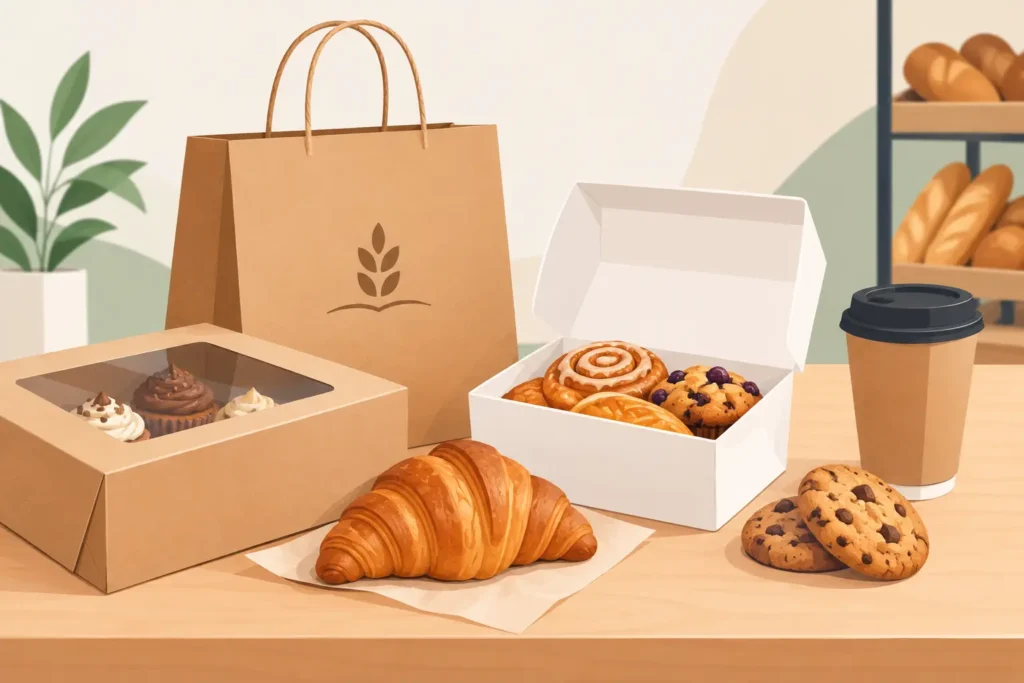
A warm croissant in a flimsy bag, a cupcake sliding around a box, or a cake lid that will not stay closed can undo a lot of good baking. What packaging does a bakery need? The right mix of bakery boxes, paper bags, food wraps, labels, and transport cartons to keep products fresh, presentable, and easy to carry from counter to customer.
The best setup is not always the most expensive one. It is the one that matches your menu, service style, and order volume. A neighborhood bakery selling muffins over the counter needs a different system from a cake studio handling weekend pickup orders or a wholesale baker delivering pastries to cafes.
What Packaging Does a Bakery Need?
Most bakeries need packaging in three layers: primary packaging that touches or directly holds the food, carry packaging for the customer, and outer packaging for deliveries or larger orders. Starting with this simple system helps prevent overbuying while covering the everyday jobs that keep service moving.
For primary packaging, think pastry bags, sandwich paper, greaseproof sheets, cake boards, cupcake inserts, and food-safe wraps. These items protect the product without adding unnecessary bulk. Carry packaging includes paper bags, window boxes, cake boxes, and handled bags. Outer packaging is for catering orders, wholesale deliveries, ecommerce shipments, or transporting delicate baked goods between locations.
The specific products depend on what leaves your bakery most often. A good rule is to package for the product’s shape, weight, moisture level, and travel time, not just its appearance on the shelf.
Start With Your Everyday Counter Items
Counter service usually creates the highest packaging turnover, so this is where a practical bakery should start. Flat paper bags and greaseproof bags suit cookies, buns, croissants, donuts, slices, and small pastries. They are quick to load, easy for customers to carry, and use less material than a box for a single item.
Choose grease-resistant paper where butter, icing, oil, or chocolate is involved. Standard paper bags can soften or stain when handling greasy products, especially if customers are buying warm pastries. A greaseproof bag or sheet keeps the outside cleaner and gives the product a more professional finish.
For items customers may eat on the go, bakery tissue or food wrap can be useful inside a bag. It gives staff a cleaner way to handle products and prevents crumbs, glaze, or oil from transferring to the customer’s hands. If you sell sandwiches, rolls, or filled pastries, food-grade wrap and sandwich wedges may also be worth keeping near the counter.
Window bakery boxes are a strong option for premium single items or small assortments. A clear window lets customers see decorated cookies, macarons, brownies, or pastries without opening the box. That matters for display sales, gift purchases, and pre-orders, where presentation can influence the sale.
Use Boxes That Keep Cakes and Cupcakes Stable
Cakes need more than a box. They need a stable base, enough clearance around decorations, and a box size that prevents movement in the car. A cake board should support the full diameter of the cake, while the box should be just large enough to avoid sliding without touching the icing.
Stocking several common cake box sizes is usually more efficient than trying to make one size work for everything. Small boxes can crush tall decorations, while oversized boxes leave too much room for movement. For taller cakes, select boxes with enough height for toppers and piped finishes. If your bakery produces tiered or custom celebration cakes, measure the finished product rather than relying on the pan size.
Cupcakes need inserts. Without them, a dozen cupcakes can shift during a short trip and arrive with damaged frosting. Match the insert count to your most popular pack sizes, such as single, four, six, or twelve. A clear lid can work well for display, while a traditional bakery box with an insert offers more protection for pickup orders.
For cakes, cheesecakes, and dessert platters, do not overlook the board or tray beneath the product. A box only performs properly when the base is rigid enough to support the weight. Flimsy boards can bend during handoff, which is a risk no bakery needs on a busy Saturday.
Choose Packaging for Bread, Loaves, and Freshness
Bread packaging is a balancing act. Customers want a loaf that stays fresh, but crusty artisan bread also needs airflow to avoid becoming soft. Paper bread bags are a practical choice for sourdough, baguettes, rolls, and crusty loaves sold for same-day eating. They look right for the product and allow some ventilation.
For sliced loaves, soft sandwich bread, or products customers may keep for several days, clear food-safe bags with closures can offer better moisture protection. The right choice depends on your product and how quickly it is expected to be eaten. A paper bag may suit a bakery-fresh loaf beautifully, but it will not provide the same shelf life as a sealed bag.
Labels matter here. Use them to show the product name, date, ingredients, allergen information, storage advice, or a best-by date where required. Clear, consistent labels also help staff rotate stock and make it easier for customers to choose confidently.
Plan for Takeout, Catering, and Delivery
A bakery that offers delivery needs to think beyond the individual pastry box. Products may be stacked, carried up stairs, placed in a delivery vehicle, or left at a reception desk. The outer packaging must protect the inner presentation.
Use strong corrugated cartons for larger cake orders, wholesale pastry trays, catering boxes, and shipments. Add void fill or food-safe cushioning where needed so boxes cannot move inside the carton. For local delivery, the goal is often stability rather than heavy-duty shipping protection. For courier shipping, allow for more handling and choose a stronger carton with a snug fit.
Pizza-style boxes can be useful for flat baked goods, cookie assortments, slab cakes, brownies, focaccia, and dessert platters. They stack well and are easy to open at the point of service. For catering, handled carry bags can make multiple boxed orders easier for customers to manage.
If you offer online ordering, test-pack your most delicate products before listing them for delivery. A box that works perfectly across the counter may not survive an hour in a vehicle. One test run can save a refund, a remake, and an unhappy review.
Build Your Brand Without Overcomplicating It
Plain stock packaging is often the best starting point for a new bakery or a business with changing product lines. It is affordable, flexible, and easy to replenish. You can still make it feel branded with a sticker, stamp, printed tissue, or label.
Custom printed boxes and carry bags make more sense when your order volume is steady and your packaging sizes are established. They are particularly useful for cakes, cookie gift boxes, catering, and products that are frequently photographed or given as gifts. The trade-off is that custom packaging requires clearer forecasting. A printed box designed for one cake size may become dead stock if your range changes.
Small businesses do not always need to commit to a large packaging run to look professional. Short-run custom packaging can be a practical middle ground, especially for seasonal products, market stalls, launches, or a bakery testing a new identity. Able Packaging can help businesses combine everyday stock packaging with custom-made cartons or bags when branded presentation is worth the extra step.
Keep a Core Range, Then Add for Your Menu
A sensible bakery packaging range starts with the items staff use every day and expands only when there is a clear need. Keep common bags, pastry paper, cake boards, cake boxes, cupcake boxes, labels, and carry bags within easy reach. Then add specialty items for macarons, pies, sandwich trays, catering, or holiday gift packs based on actual sales.
Buying too many sizes creates storage problems and slows down staff at the counter. Buying only one or two sizes can lead to poor fit and damaged products. Review your top-selling items each month and check whether the packaging is still doing its job. If staff are taping boxes shut, doubling up bags, or improvising inserts, the system needs adjusting.
Also consider speed. Packaging should be easy to assemble during a rush, simple to store, and reliable enough that a new staff member can use it correctly. Saving a few cents on a box is not a win if it adds time to every order or causes product damage.
The right bakery packaging lets your products arrive looking as good as they did when they left the oven. Start with the packaging your busiest day demands, choose sizes that fit your real menu, and keep a dependable supply on hand so a great bake never leaves the counter underprotected.