


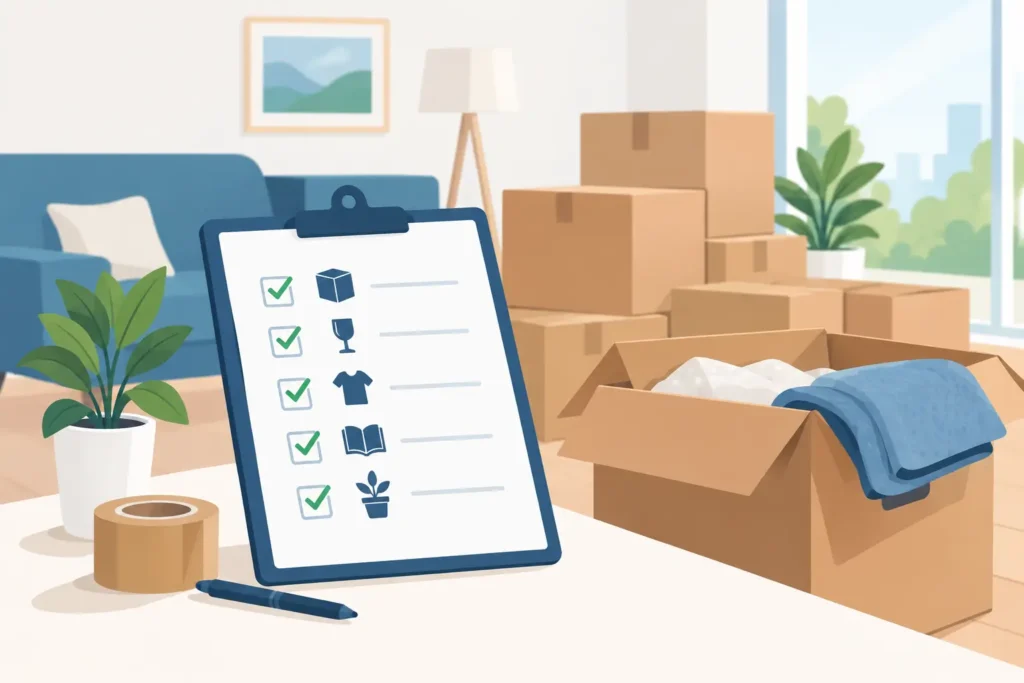
A move can go wrong long before the truck arrives. A box that is too heavy, a glass packed without cushioning, or an unlabeled carton can turn move-in day into a frustrating search. This removal packing checklist helps you pack by room, use the right materials, and keep your belongings protected from door to door.
Start Your Removal Packing Checklist Early
The easiest way to save time and packing material is to sort before you pack. Go room by room and set aside items to keep, donate, sell, recycle, or dispose of. There is no value in paying to move old cables, cracked containers, or clothes that have not been worn in years.
Start with the rooms and items you use least. Guest-room linen, bookshelves, wall art, seasonal clothing, and garage storage can usually be packed well ahead of moving week. Keep daily essentials available until the last few days, including medication, chargers, toiletries, work equipment, pet supplies, and a few basic kitchen items.
Before buying cartons, estimate what each room needs. Small boxes are better for dense, heavy items such as books, canned goods, tools, records, and kitchenware. Medium boxes suit toys, folded clothing, small appliances, and mixed household items. Large cartons are for light but bulky belongings such as bedding, cushions, lampshades, and winter coats. Filling a large box with books is a fast way to create a carton that is difficult and unsafe to lift.
Gather the Right Moving Supplies
Strong cartons and proper tape do more work than most people expect. Reused boxes can be useful if they are clean, dry, and still rigid, but avoid cartons with crushed corners, soft bases, old moisture damage, or weakened tape seams. They are not worth the risk for fragile or valuable items.
For a typical household move, keep these supplies on hand:
- Small, medium, and large moving boxes
- Heavy-duty packing tape and a tape dispenser
- Bubble wrap or foam cushioning for fragile items
- Packing paper for wrapping and filling gaps
- Stretch wrap for drawers, furniture, and loose parts
- Permanent markers and clear labels
- Box cutters or scissors, used carefully
- Mattress covers, furniture covers, and moving blankets where needed
Packing paper is usually the better choice for wrapping plates, glasses, and other breakables because it molds around each item and leaves no ink transfer. Bubble wrap provides extra impact protection for delicate or high-value pieces. Use both where needed, rather than relying on one material for every item.
Do not stretch your tape supply too far. Seal the bottom of every carton with a center strip and two strips across it, often called an H-tape seal. If a box is holding heavy items, reinforce the base before it is filled. Once the top is closed, tape it the same way.
Pack One Room at a Time
Packing one room at a time makes labeling easier and reduces the chance of mixing unrelated items into a mystery box. It also gives you a clear view of progress. Finish a room, stack its sealed cartons together, and move on.
Use each box efficiently, but do not force items into place. Start with a layer of crumpled packing paper on the bottom. Place heavier items low in the carton, add lighter pieces on top, then fill empty spaces so contents cannot shift during transport. A correctly packed box should feel full and stable when gently moved, without bulging at the sides.
Keep carton weight manageable. As a general guide, one person should be able to lift a packed box without straining. If a carton feels awkward, split it into two smaller boxes. This matters even more when stairs, narrow hallways, or long carrying distances are involved.
Kitchen and Glassware
Wrap plates individually, then pack them on their edge rather than flat. Place cushioning between plates and use a sturdy, smaller carton. Wrap glasses and mugs separately, paying attention to handles, stems, and rims. Keep them upright where possible, fill the remaining voids with paper, and mark the carton as fragile.
Pots and pans can be nested with paper between surfaces. Use towels or tea towels as extra cushioning, but do not rely on soft fabric alone to protect glass. For knives, wrap blades securely and label the bundle clearly before placing it in a carton.
Books, Records, and Paperwork
Books and vinyl records are heavy for their size. Pack them in small cartons only, with records standing upright and packed snugly enough that they cannot bend. Important paperwork, passports, legal records, and small valuables should travel with you rather than in the moving truck.
Electronics and Cables
If you still have the original packaging for a television, monitor, computer, or game console, use it. Otherwise, choose a close-fitting carton and protect the item on all sides with suitable cushioning. Never place heavy objects on top of electronics.
Take photos of cable connections before unplugging equipment. Put cables, remotes, screws, and accessories into labeled bags, then tape those bags to the item or place them in a clearly marked electronics box. This small step prevents a lot of setup frustration later.
Furniture and Large Items
Empty drawers unless the furniture is designed to be moved with contents inside and the load remains light. Remove legs, shelves, and detachable hardware where practical. Put screws, bolts, and fittings in a labeled bag, then secure it to the furniture item with tape or stretch wrap.
Use stretch wrap to keep drawers and doors closed, and use furniture covers or moving blankets to prevent scratches. Avoid placing adhesive tape directly on finished timber, leather, or painted surfaces because it can leave residue or lift the finish.
Label Every Carton for the New Home
A label that says only “kitchen” is better than nothing, but it is not enough when you are trying to find the coffee maker on the first morning. Label the top and at least one side of every box with the destination room and a brief description of contents. For example: “Kitchen – mugs, kettle, tea towels” or “Main bedroom – bedside lamps and books.”
Add handling notes where relevant: “Fragile,” “This side up,” “Heavy,” or “Open first.” Keep labels simple and easy to read from a distance. Color-coded labels can help larger moves, particularly when several people are unloading at once.
Numbering boxes also helps. Keep a basic inventory on your phone or in a notebook, especially for high-value items, business stock, or storage moves. You do not need to list every spoon. Record enough detail to know what is in each carton and confirm nothing has been left behind.
Pack an Essentials Box Separately
Your essentials box should stay with you, not get buried in the truck. Think about what you will need from the moment you arrive until you can unpack properly. Include personal documents, medications, phone chargers, toiletries, a change of clothes, basic cleaning supplies, toilet paper, snacks, bottled water, and simple tools.
For a family move, add children’s comfort items, pet food and leads, and anything needed for the first night. If you are moving a home office or small business setup, keep the most critical devices, files, and chargers separate as well. The right essentials box gives you breathing room when the rest of the home is still stacked in cartons.
Do a Final Check Before Loading
Walk through every room, cupboard, shed, garage, and outdoor area before the truck leaves. Check that boxes are sealed, labels face outward, and fragile items are not loaded beneath heavy cartons. Keep cleaning products separate from food, and never pack hazardous materials such as fuel, propane cylinders, fireworks, or leaking chemicals into a standard household move.
It is worth keeping a small roll of tape, a marker, packing paper, and a few spare boxes accessible until the very end. Last-minute items always appear: the router behind the desk, a shelf from the laundry, or the lamp that could not be packed until moving morning.
A good move is not about using the most boxes. It is about using the right box, the right protection, and a label that saves you time when it matters. Pack steadily, keep loads sensible, and give fragile items the space and cushioning they need. That is how you arrive ready to unpack rather than ready to replace what broke.