


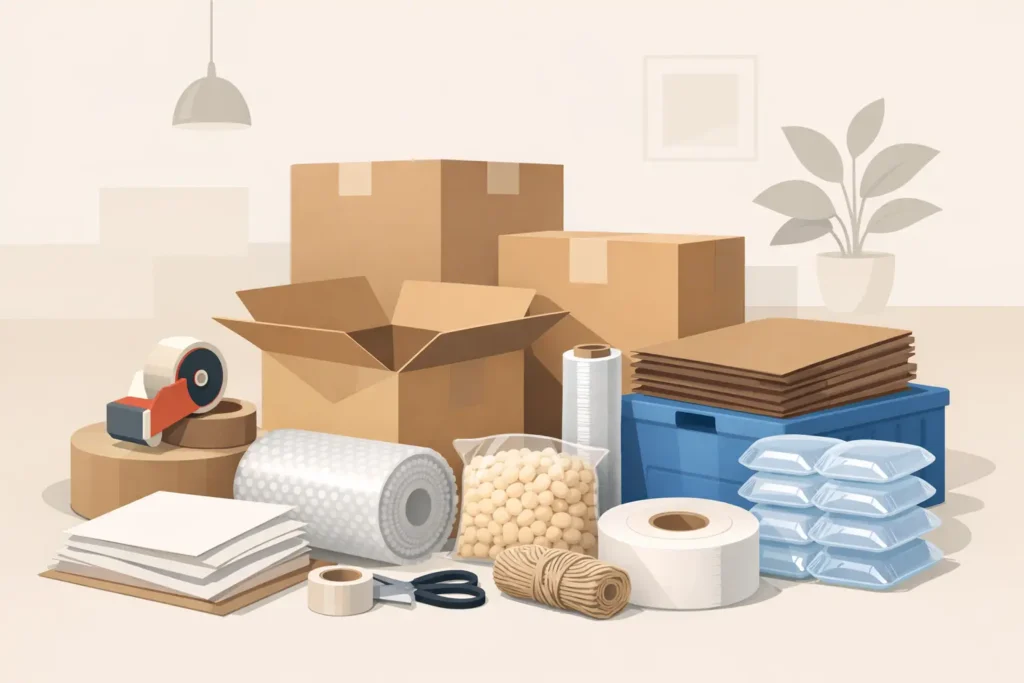
A move can go wrong before the truck leaves the driveway. A box that is too large, a plate packed without cushioning, or a heavy load sealed with weak tape can turn a simple job into damaged goods and wasted time. The right packaging materials for moving help you pack faster, protect what matters, and unload without finding broken items at the bottom of a carton.
The goal is not to buy the most materials. It is to use the right materials for the weight, shape, and fragility of each item. Start with sturdy boxes, reliable sealing tape, and protective fill, then add specialty supplies where they will make a real difference.
Start With Boxes That Match the Load
Moving boxes are not one-size-fits-all. A carton should be large enough to hold an item comfortably, but not so large that it becomes difficult to lift or leaves too much empty space. Oversized cartons are a common cause of crushed corners, split bottoms, and overloaded boxes.
Small cartons are best for dense, heavy items such as books, canned goods, tools, records, and small appliances. Keep these boxes manageable. If a box is hard to lift while packing it, it will be harder and less safe to carry later.
Medium cartons suit most household items, including kitchenware, toys, folded clothing, electronics, and pantry goods. Large cartons are useful for lightweight, bulky belongings such as pillows, linens, lampshades, and winter coats. Wardrobe cartons can save considerable packing time for hanging clothes, particularly when moving a closet, retail stock, or costumes.
For fragile or valuable items, choose double-wall cartons where possible. They cost more than standard single-wall boxes, but the extra strength is worthwhile for glassware, framed art, electronics, and heavier loads. Reused cartons can be economical, but inspect them carefully. Skip boxes with soft spots, torn flaps, water marks, or weakened corners.
Essential Packaging Materials for Moving
Most moves need a practical core set of supplies. Buying these before packing starts avoids repeated store runs and the temptation to use poor substitutes halfway through the job.
- Packing tape and a tape dispenser: Use quality carton-sealing tape, not masking tape or household adhesive tape. A handheld dispenser speeds up work and creates a cleaner, tighter seal.
- Bubble wrap: Use it for glass, ceramics, electronics, framed pieces, and other breakable items. Larger bubbles provide more cushioning for heavier goods, while small bubbles work well for smaller, delicate pieces.
- Packing paper or unprinted newsprint: This is the workhorse material for wrapping plates, cups, bowls, and ornaments, as well as filling gaps inside cartons.
- Stretch wrap: Useful for securing drawers, protecting upholstered furniture, keeping cabinet doors closed, and bundling awkward items together without leaving tape residue.
- Furniture pads or moving blankets: These protect timber, painted surfaces, appliances, mirrors, and furniture corners during loading and transport.
- Labels and permanent markers: Clear labeling saves time at both ends of the move. Mark the room, a short description of contents, and “FRAGILE” where needed.
A tape gun, box cutter, and marker may seem like small additions, but they keep the packing line moving. For business relocations, having several tape dispensers available prevents staff from waiting around for one tool.
Use Paper and Bubble Wrap for Different Jobs
Bubble wrap is excellent protection, but it does not need to wrap every item in the house. Packing paper is usually the more cost-effective choice for everyday kitchenware and gap filling. Wrap each plate individually in paper, then stack plates upright in a sturdy carton rather than flat. The edge of a plate is stronger than its broad surface during transit.
Use bubble wrap around the most vulnerable items: stemware, display pieces, electronics, mirrors, and items with sharp corners. Place wrapped goods in a box with paper cushioning beneath, between, and above them. A carton should be full enough that nothing shifts, but not packed so tightly that pressure damages the contents.
Avoid wrapping items directly in printed newspaper when ink transfer could be a problem. White packing paper is cleaner for light-colored dishes, clothing, collectibles, and retail goods.
Protect Furniture, Art, and Awkward Items
Furniture needs a different approach from boxed household goods. Remove loose shelves, legs, and hardware where practical, then place screws and fittings in labeled bags secured to the relevant item. Do not leave hardware loose in a drawer where it can scratch surfaces or disappear during unloading.
Cover timber and upholstered furniture with moving blankets or furniture pads. Use stretch wrap to hold the pads in place, but avoid wrapping bare timber, leather, or polished surfaces tightly in plastic for extended periods. Heat and moisture can create problems, especially if the items will be stored before unpacking.
For mirrors, artwork, and framed photographs, protect the glass face with cardboard and wrap the entire piece with bubble wrap or a furniture pad. Pack frames vertically, never flat under heavy cartons. Corner protectors are a sensible extra for valuable frames and large mirrors.
Mattress bags keep mattresses clean in the truck and protect them from dust, moisture, and scuffs. Appliance boxes or heavy-duty cartons are useful for TVs, computer monitors, and other high-value electronics. If original packaging is still available, use it. It was designed for that product.
Pack Boxes So They Survive the Trip
Good materials only work when they are used properly. Tape the bottom of every carton using the H-tape method: one strip along the center seam and one across each outer edge. For heavy boxes, add a second layer of tape across the base.
Put heavier items at the bottom and lighter items on top. Fill empty spaces with crumpled packing paper, bubble wrap, or other clean void fill so contents do not move. Before sealing, gently shake the carton. If you hear or feel movement, add more fill.
Keep box weights reasonable. There is no single perfect limit because it depends on who is lifting, how far boxes are carried, and whether equipment is available. Still, a smaller box of books is safer than a large box of books, even if the larger carton technically holds them.
Label more than the destination room. A note such as “Kitchen – glasses – open first” is far more useful than simply writing “Kitchen.” For cartons that must remain upright, add arrows on more than one side. If you are moving a business, include department, stock type, or shelf location to make setup quicker.
Do Not Forget Specialty Moving Supplies
Some items deserve purpose-made protection. Wine and beverage cartons with internal dividers reduce bottle-to-bottle contact. Record mailers or sturdy cartons protect vinyl from bent corners. Picture boxes suit framed prints, while mattress covers, garment bags, and archive cartons help keep specific items clean and organized.
For computers and office equipment, anti-static materials may be appropriate for sensitive components. For documents, use file boxes that can be carried and stacked securely. Food-service operators and retailers moving stock should use clean cartons suitable for the product, especially where food packaging, branded goods, or customer-facing inventory is involved.
It can be tempting to fill every spare box with loose items, but mixed cartons create frustration when unpacking. Keeping categories together costs little extra time during packing and can save hours later.
Buy Enough, But Avoid Waste
Estimate supplies by room, then add a modest buffer for breakables and last-minute items. Running short on tape or packing paper is common. Buying too many specialty boxes, however, can be unnecessary if standard cartons and good cushioning will do the job.
If you are uncertain about carton sizes or protection for a difficult item, practical advice can prevent an expensive mistake. Able Packaging supplies moving essentials alongside specialty cartons, protective wraps, and packing materials for jobs ranging from a single room to a full business relocation.
Pack one box completely before committing to a method for the rest of the house or workplace. It will show whether the carton size, cushioning, and labeling system are working. A well-packed first box sets the standard for a calmer move and a much easier unpacking day.