


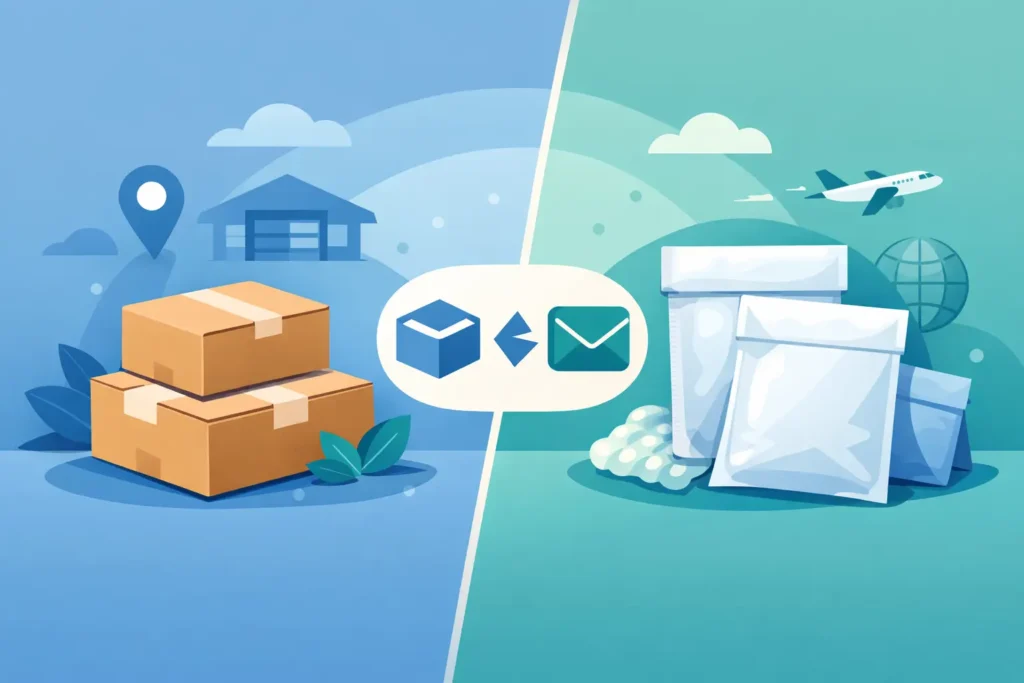
A low-cost package is not always the cheapest way to ship. When comparing mailer boxes vs satchels, the right choice comes down to what you are sending, how far it is traveling, and the experience you want customers to have when it arrives. A satchel can reduce packing time and postage weight. A mailer box can prevent damage, improve presentation, and reduce the cost of replacements.
For ecommerce sellers, retailers, warehouse teams, and businesses sending regular orders, the best option is usually the one that protects the product without paying for more packaging than the job requires.
Mailer Boxes vs Satchels: The Practical Difference
Mailer boxes are rigid, folding cardboard boxes designed to hold their shape during transit. They generally have an integrated lid and locking tabs, so they can often be assembled without tape. They are a popular choice for subscription products, apparel, gift packs, cosmetics, books, small food items, and products that need a more polished presentation.
Satchels are flexible mailing bags, commonly made from plastic or paper. They are light, fast to pack, and available in plain, padded, and tamper-evident styles. They suit soft, non-fragile goods such as clothing, textiles, documents, accessories, and products already protected by their own retail packaging.
Neither format wins in every situation. A poly mailer satchel is hard to beat when shipping a T-shirt. Put a candle, glass bottle, framed print, vinyl record, or boxed gift into the same satchel without enough protection, and the savings can disappear quickly.
When Satchels Make Better Business Sense
Satchels are built for speed and low material use. A self-seal satchel takes seconds to pack: place the item inside, remove the adhesive strip, and seal it. There is no box to erect, no void fill to add, and less storage space needed before packing.
That makes satchels particularly useful for businesses processing a steady volume of lightweight orders. If you sell folded clothing, fabric goods, soft toys, scarves, or unbreakable accessories, a satchel can keep packing costs under control while protecting the item from dirt and light moisture.
Weight also matters. Although shipping rates depend on carrier rules, box size, and destination, a satchel normally adds less weight than corrugated cardboard. For small, lightweight products, that difference can help keep postage costs down.
Padded satchels offer a middle ground. They provide more cushioning than a standard mailer while remaining lighter and quicker to use than a box. They work well for smaller items that need moderate protection, such as jewelry in a gift box, electronics accessories, cosmetics, or small homewares. However, padding does not make a satchel crush-proof. If the product cannot tolerate pressure, choose a box.
Satchels also have limits that matter in a busy warehouse. Their flexible shape can make labeling uneven, stacking difficult, and automated handling less predictable. Products may move around inside unless the satchel is sized closely. For a professional result, avoid putting a small item in an oversized satchel just because it is available.
When a Mailer Box Is Worth the Extra Cost
Mailer boxes cost more per unit than most basic satchels, and they occupy more storage space. In return, they offer structure. That structure protects against crushing, supports stacking, and gives you a cleaner, more consistent parcel.
A mailer box is usually the safer choice for products that are fragile, easily bent, presentation-sensitive, or sold at a price where a damaged delivery will hurt customer confidence. Think glassware, candles, skincare sets, specialty food, books, stationery packs, premium apparel, gift bundles, and branded retail products.
The customer experience is another reason to use a box. A well-sized mailer box opens neatly, holds products in place, and makes an order feel intentional rather than simply posted. For brands building repeat business, that can matter. The box does not need to be extravagant. Clean, correctly sized packaging with a tissue wrap, insert, or simple label can look professional without pushing costs too high.
Mailer boxes are also useful when you need to create a consistent size for fulfillment. A standard box format makes it easier to organize packing benches, apply labels, estimate void fill, and train staff. If you regularly ship the same product range, choosing two or three box sizes can simplify the entire packing process.
Protection Is About More Than the Outer Pack
The outer package should match the product’s risk level. A mailer box protects against compression better than a satchel, but it still needs internal support when the contents are fragile or can move during transport. Bubble wrap, tissue paper, paper void fill, cardboard inserts, or molded protection may be needed depending on the item.
For example, a boxed candle may travel well in a fitted mailer box with a small amount of paper fill. A loose candle in a large box is more likely to be damaged because it can shift and strike the sides. The same principle applies to satchels. A padded satchel works best when the product fits closely and already has some protective packaging.
Water resistance is another trade-off. Poly mailer satchels are generally better at keeping rain and splashes away from contents than plain cardboard. If you are using a mailer box for goods that must stay dry, consider an inner bag, protective wrap, or a weather-resistant outer layer where appropriate.
Cost: Look Beyond the Price Per Pack
It is easy to compare a carton of mailer boxes with a pack of satchels and choose the lower unit price. But packaging costs should be measured per successful delivery, not just per package purchased.
A practical cost check includes the outer packaging, internal protection, packing labor, storage space, postage impact, and likely replacement costs from transit damage. A satchel may cost less and pack faster, but a box may reduce breakages and customer service issues. Conversely, placing a soft garment in a box may add cost without providing a real benefit.
The best approach is to test your actual products. Pack a typical order in each suitable option, weigh it, check how it fits, and assess how well it handles light pressure. If possible, send a sample through your normal delivery network. This gives you better information than choosing on appearance alone.
Choosing the Right Size
Oversized packaging wastes materials, increases movement, and can make a parcel look poorly packed. Packaging that is too tight can damage corners, put pressure on closures, or make packing slow and frustrating.
For satchels, choose a size that allows the product to slide in without forcing the seal area. Leave enough room for the adhesive flap to close securely, but avoid a large empty section that can catch or tear during transit.
For mailer boxes, measure the product after any retail box, wrapping, or protective material has been added. The internal dimensions of the mailer are what matter. If you need void fill on all sides, allow for that in your measurements. A snug fit is efficient, but fragile products still need a protective buffer.
Presentation and Branding Considerations
If your packaging is part of the sale, mailer boxes give you more usable space for branding. They can be printed, labeled, stamped, or finished with custom tissue and inserts. This is especially useful for gift businesses, subscription sellers, wineries, beauty brands, and retailers where the unboxing experience supports perceived value.
Satchels can still look professional. A clean, good-quality satchel with a well-positioned shipping label and branded sticker can be perfectly suitable for everyday ecommerce orders. They are often the sensible choice when the item itself is the focus and the buyer values fast, affordable delivery over a premium opening experience.
For small businesses, short-run custom packaging can be a practical way to add branding without taking on large inventory commitments. Start with the product range that benefits most from presentation rather than printing every package you send.
A Simple Way to Decide
Choose a satchel when the product is soft, light, non-fragile, and already protected. Choose a padded satchel when it needs modest cushioning but is not likely to be crushed. Choose a mailer box when shape, corners, finish, or customer presentation matters. For fragile or high-value items, use a sturdy box with the right internal protection rather than relying on a padded bag.
The right package should make your team faster, keep products protected, and suit the value of the order. Start with one or two common products, trial the most appropriate sizes, and build your packing range from what performs well in real deliveries.