


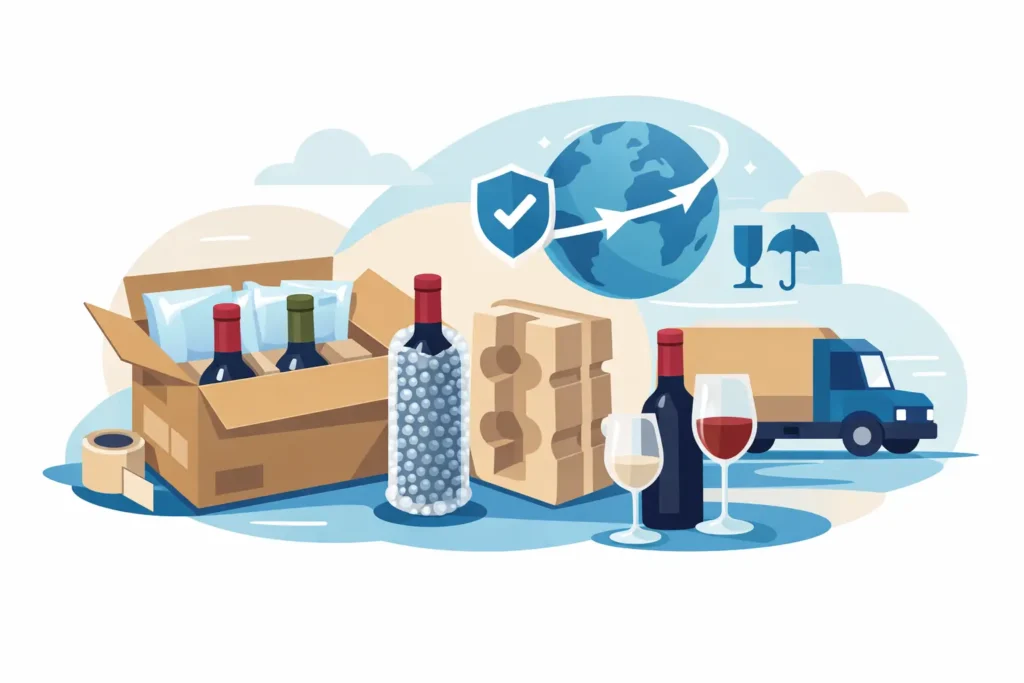
A broken bottle is more than a refund. It can soak labels, ruin the rest of the order, create a carrier claim, and leave your customer questioning whether to buy from you again. Learning how to ship wine bottles properly starts with one rule: the bottle must not be able to touch another bottle, the carton wall, or open space during transit.
That sounds simple, but wine is heavy, fragile, and often shipped through several handling points. The right bottle packaging protects the glass, keeps the carton stable, and gives your brand a professional finish when the order arrives.
Start with the shipping rules, not the box
Before packing an order, confirm that you are allowed to ship alcohol to the destination. In the US, alcohol shipping is regulated at federal, state, and local levels. Requirements can differ depending on whether you are a winery, retailer, licensed shipper, or private individual.
Most major carriers only accept alcohol shipments from approved, licensed businesses under specific contracts. They may require adult-signature service, approved shipping labels, and clear documentation. Do not assume that a standard parcel service or a “fragile” sticker makes a wine shipment compliant.
If you sell wine, build your packing process around the carrier and licensing requirements you actually use. If you are moving personal bottles or sending a non-commercial gift, check the rules before you buy supplies. Packaging protects the product, but it does not replace legal shipping approval.
Choose a carton made for wine bottles
A wine bottle needs a purpose-built shipping carton, not a recycled grocery box with a handful of loose packing peanuts. The carton needs enough board strength to carry the weight of glass and liquid without crushing, bowing, or splitting at the seams.
For standard 750 ml bottles, use a wine shipper carton sized for the number of bottles you are sending. One-bottle, two-bottle, three-bottle, six-bottle, and twelve-bottle configurations are common. A carton that fits the bottle count closely is easier to pack securely and cheaper to ship than an oversized box filled with excess void fill.
The best carton depends on the shipment. A single bottle may need a strong small shipper with a molded or cardboard insert. A case of wine needs a heavier-duty carton with dividers, especially if it will travel long distances or through a parcel network. For high-value bottles, an outer carton around the inner bottle shipper can add useful crush protection.
Do not confuse retail carry boxes with shipping cartons. A decorative wine gift box may look good on a shelf, but it is usually not designed to absorb the drops, stacking pressure, and vibration of transit. It can be part of the presentation, but it still needs a protective outer shipping box.
Use inserts to keep every bottle separate
The insert does the detailed work inside the carton. It holds each bottle in position and prevents glass-on-glass contact, which is one of the most common causes of breakage.
Cardboard wine dividers are a practical choice for standard bottle shipments. They create individual cells and keep the load organized, making them useful for wineries, retailers, and businesses sending multiple bottles at a time. Molded pulp or foam inserts can provide more protection for individual bottles or premium gift packs, particularly when bottle shapes vary.
Check the fit before committing to a packaging format. Bordeaux, Burgundy, Champagne, sparkling wine, and specialty bottles can have very different diameters and heights. A divider designed for a narrow Bordeaux bottle may be too tight for a wider sparkling bottle. Forcing a bottle into the wrong cell can create pressure points around the shoulder or base.
For unusual bottle sizes, test-pack one full carton. Close it, lift it, gently move it, and listen for movement. If bottles knock together or the carton bulges, the fit is wrong. Change the insert, carton size, or cushioning before packing a larger run.
Cushion the top, bottom, and empty space
Dividers alone may not be enough. There should be protection between the bottles and the top and bottom of the carton, particularly if there is any headspace above the bottle caps.
Place a cushioning layer at the base when the insert does not already provide one. After the bottles are loaded, add padding on top so the bottles cannot bounce upward when the carton is handled. Bubble wrap, corrugated pads, kraft paper, or molded pads can all work when used correctly.
The goal is controlled support, not simply adding more material. Loose fill can shift away from the bottle during transit. Too much bulky cushioning can distort the carton or leave the bottles under pressure. Use enough material to remove movement while keeping the box square and easy to seal.
For a single bottle, wrap the bottle evenly before placing it into its protective insert or cell. Pay particular attention to the base and shoulder, where impact damage is common. Avoid wrapping so tightly that the bottle is difficult to remove or the carton begins to bow.
Seal the carton for its actual weight
Wine shipments are deceptively heavy. Twelve standard 750 ml bottles can weigh well over 30 pounds before you add the carton and protective material. Weak tape or a rushed seal can turn a well-packed order into a damaged shipment.
Use quality packing tape and apply it across the center seam and both edge seams of the carton bottom and top. This is commonly called the H-tape method because the tape pattern covers the main seam and both side edges. Do not rely on masking tape, string, or a single short strip of tape.
For heavier case shipments, reinforce the bottom before loading. If the carton feels soft, the seams pull apart, or the flaps do not sit flat, move to a stronger carton. Strapping can help secure larger loads, but it should support a correctly selected box rather than compensate for poor carton strength.
Label clearly, but do not rely on “fragile”
Apply the shipping label to the largest flat side of the carton, where it is easy to scan and unlikely to fold over an edge. Remove or cover old barcodes and labels if you are reusing an outer box, although new cartons are usually the safer choice for wine.
A fragile label can alert handlers, but it is not a substitute for protective packaging. Parcels still move through conveyors, sorting systems, trucks, and stacked loads. Pack every wine shipment as though it may be set down firmly or have another carton placed on top of it.
Follow your carrier’s required alcohol markings and adult-signature instructions where applicable. Clear, correct labeling helps avoid delays and keeps your delivery process consistent for customers.
Consider weather and delivery timing
Wine can be damaged by more than impact. High heat can affect flavor, push corks, or cause leakage. Freezing temperatures can expand the liquid and crack the bottle. If you ship during extreme weather, choose faster transit where practical and avoid leaving cartons in depots or on doorsteps over weekends.
This matters most for premium wine, temperature-sensitive styles, and deliveries to regions with severe seasonal weather. It may cost more to use an expedited service, but the cost can be lower than replacing a damaged order and losing customer confidence.
For direct-to-consumer sales, time shipments around your customer’s availability. Adult-signature deliveries are less likely to sit outside if the recipient knows when to expect them. A delivery notification and clear checkout communication can prevent avoidable failed delivery attempts.
Test your wine packaging before a busy season
The best time to find a weak box is before your holiday rush, not after a customer sends photos of a leaking carton. Pack a sample shipment using the exact bottle, insert, carton, tape, and label setup you plan to use. Check for movement, bulging, poor tape adhesion, and empty space.
For regular shipping volumes, keep a simple packing standard at the bench. It should show the correct carton for each bottle count, the matching insert, the required cushioning, and the sealing method. This helps staff pack consistently and makes reordering supplies much easier.
If your bottles are unusual in shape or you are building a branded gift range, a custom carton can be worth considering. The right fit reduces excess void fill, improves presentation, and helps avoid the cost of shipping air. Able Packaging can help businesses source practical wine cartons, dividers, protective materials, and custom packaging for smaller runs as well as ongoing supply.
A wine shipment should feel solid before it leaves your hands: no rattle, no crushed corners, no loose seams, and no guesswork about the carrier’s rules. That small amount of care at the packing bench is what gives every bottle its best chance of arriving ready to pour.