


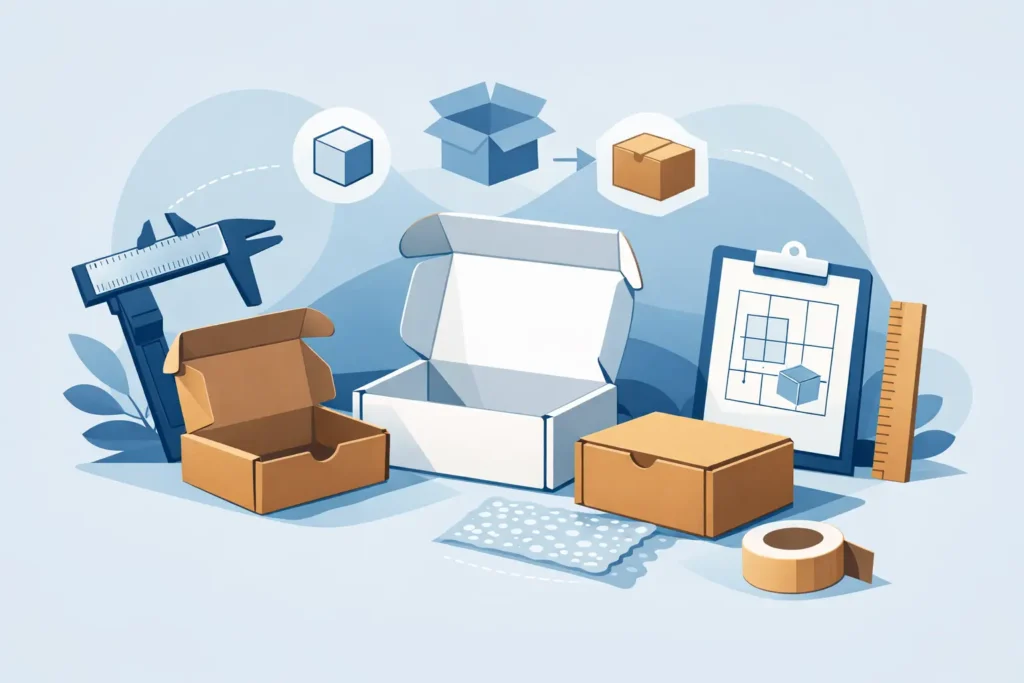
When a box is too big, your product moves, corners get crushed, and you pay to ship empty space. When it is too small, packing slows down and items arrive looking squeezed or damaged. If you are figuring out how to choose mailer boxes, the right answer is not just what looks good on a shelf. It is what protects the product, packs efficiently, and makes sense for your shipping costs.
Mailer boxes are popular for ecommerce, retail kits, subscription orders, promotional packs, and gift shipments because they are sturdy, presentable, and easy to brand. But not every mailer box suits every job. A candle shipment has different needs than apparel, glassware, food items, or printed materials. The best choice comes from matching the box to the product, the packing process, and the way the order will travel.
How to choose mailer boxes for your product
Start with the product itself. Weight, dimensions, fragility, and finish all matter. A lightweight T-shirt can sit comfortably in a thinner board grade with minimal void fill. A ceramic mug or jar needs more structure, a closer fit, and often some internal protection to stop movement.
Measure the packed item, not just the product on its own. That means including tissue, bubble wrap, inserts, sleeves, labels, or any presentation material that will be inside the box. Many sizing mistakes happen because buyers measure the item before they think about the packing materials around it.
A good rule is to choose a mailer box that fits closely without forcing the packer to wrestle it shut. Too much spare room usually means extra filler, slower packing, and higher freight costs. Too little room creates pressure points and makes the unboxing feel cramped. For ecommerce orders, a neat fit usually gives the best balance of protection and presentation.
Size affects more than fit
Box size has a direct effect on shipping charges, warehouse space, and labor time. Carriers often price shipments based on dimensional weight, so a bulky box can cost more even if the contents are light. That matters for businesses shipping daily, where a small size change can add up quickly across dozens or hundreds of orders.
Smaller boxes also store more efficiently. If you are running a back room, retail counter, or compact warehouse, every pallet position and shelf matters. Standardizing a few practical sizes can speed up packing and make ordering easier, but only if those sizes actually suit your product range.
There is a trade-off here. Fewer box sizes simplify operations, but too much standardization can mean wasted space and overpacking. If you ship very different products, it is usually worth carrying a small range of mailer box sizes rather than trying to make one box do everything.
Internal dimensions matter most
When comparing options, focus on the internal dimensions of the mailer box. That is the usable space your product has to sit in. External dimensions can vary based on board thickness and construction, so they are less helpful when you are trying to judge fit.
If your product has unusual proportions, such as vinyl records, framed items, flat packs, or long narrow goods, standard shapes may not give a clean fit. In those cases, a custom size can reduce filler, improve protection, and create a better presentation. For small brands, short-run custom packaging can make sense sooner than expected if it solves repeated packing issues.
Choose the right board strength
One of the biggest mistakes in selecting mailer boxes is focusing only on appearance. The board grade matters just as much. If the box is too light for the job, it can bow, crush, or split during handling. If it is heavier than needed, you may be paying extra for strength you do not actually use.
For lighter products, a standard corrugated mailer often does the job well. For heavier items or orders that may face rougher transit, step up to a stronger board. If the product is fragile, think about the full packaging system rather than the box alone. A strong box with poor internal support can still lead to breakage.
This is where real-world testing helps. Pack a sample order the way your team would normally ship it, then check for movement, pressure on edges, and how the box feels when stacked. If you are shipping glass, food jars, cosmetics, or anything with sharp corners, test before committing to a larger quantity.
Think about how the box opens and closes
Mailer boxes are popular because they are quick to assemble and create a clean presentation. Still, style matters. Some are better for retail presentation, while others are better for warehouse speed. If you are packing high volumes, small design details can affect labor time more than people expect.
A box that folds cleanly and closes securely without fuss saves time across every order. If it needs excessive tape, awkward folding, or extra handling to sit properly, that slows your team down. On the customer side, an easy-open mailer box feels neater and more professional, especially for giftable or branded products.
If returns are common in your category, consider whether the box can be reused or reclosed easily. Apparel, accessories, and subscription products often benefit from packaging that supports a simpler return experience.
Branding matters, but so does budget
A plain mailer box can still look sharp when it fits well and is packed neatly. For many businesses, especially newer ecommerce sellers, getting the fundamentals right is more important than printing every surface. Protection, consistency, and cost control should come first.
That said, branding can do real work when it is used well. A custom printed mailer box helps customers recognize your order immediately and can lift the perceived value of the product inside. It is often worthwhile for gift brands, subscription boxes, boutique retail, and any business where presentation is part of the sale.
The key is to match the level of branding to your order volume and margin. If you are still testing products or shipping in small quantities, low-volume custom printing can be a practical middle ground. It gives you a branded result without forcing a large run that ties up cash and storage space. That is one reason many growing businesses work with suppliers like Able Packaging when they want custom boxes without heavy minimums.
Inside print or outside print?
If budget is tight, think about where branding will have the most impact. Outside print makes the parcel recognizable at first glance, but inside print can create a stronger unboxing moment. For some brands, a simple one-color outside print is enough. Others may get more value from a plain exterior and a branded insert or tissue inside.
There is no single best choice here. It depends on whether your priority is brand visibility in transit, presentation on arrival, or keeping costs under control.
Match the mailer box to the shipping journey
Not every parcel travels the same way. A local hand-delivered order is not exposed to the same handling as a box moving through multiple carrier depots. If your shipments go long distance, get stacked heavily, or move through busy courier networks, your packaging needs a bit more margin for error.
Consider moisture, compression, and movement during transit. If the product can scuff easily, add protective wrap or tissue. If it is heavy for its size, make sure the box walls and closure can handle the load. If presentation matters, avoid oversized boxes that arrive dented from having too much empty space.
Seasonality also plays a part. Peak shipping periods tend to be rougher on parcels. If you are planning holiday campaigns, product launches, or wine and gift shipments during busy weeks, it is worth checking whether your usual mailer box is still the right choice under heavier freight pressure.
Do not ignore packing speed
The right box should work for your team, not just your customer. If staff are assembling hundreds of orders, a mailer box that is awkward to fold or difficult to size consistently will cost you time every day. That labor cost is easy to miss because it does not show up as a line item on the box itself.
Watch your packing bench for friction points. Are workers reaching for extra filler too often? Are some products taking longer because the fit is inconsistent? Are boxes being over-taped because the closure feels weak? Those small issues usually point to a sizing or specification problem.
When you choose mailer boxes with your actual workflow in mind, you reduce waste, speed up dispatch, and create a more consistent result. That matters just as much as unit price.
Buy for the next stage, not just today
Many businesses choose packaging based only on their current best seller. That works for the short term, but it can create headaches as the range expands. If you know you are adding new sizes, kits, or seasonal bundles, consider whether your mailer box range can flex with you.
A good packaging setup usually includes a small number of dependable stock sizes and, where needed, a custom option for products that do not fit standard cartons well. That approach keeps buying simple while giving you room to improve presentation and freight efficiency where it counts.
The best mailer box is not the fanciest one. It is the one that fits the product properly, survives the trip, supports your team, and stays within budget. Choose with the full job in mind, and your packaging will stop being a problem you work around and start being part of how you ship smarter.