


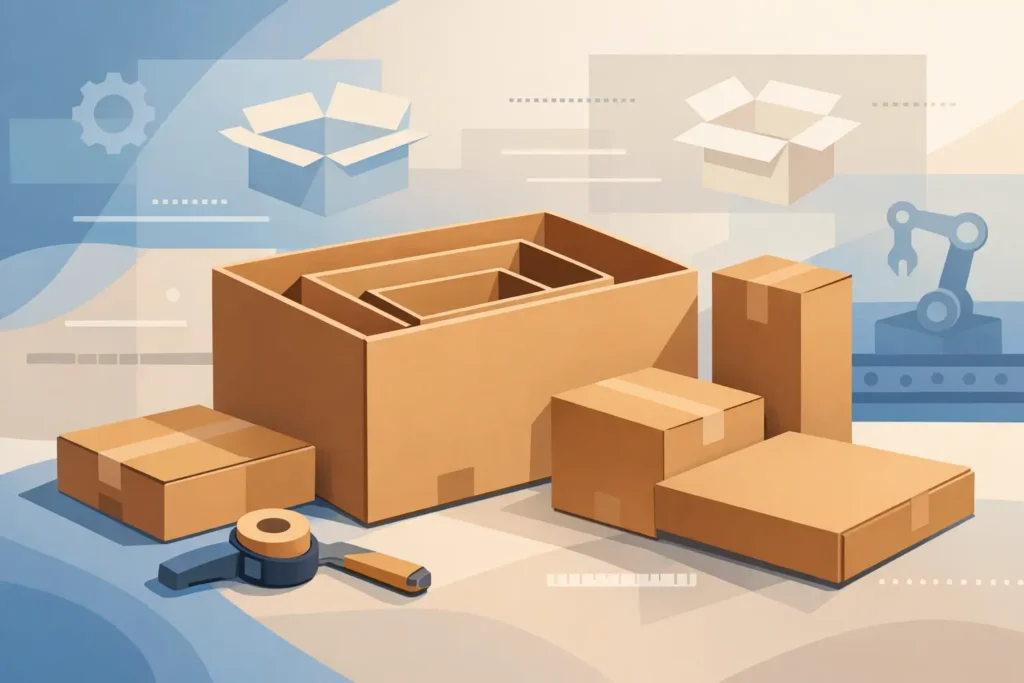
A box that is too big costs you twice. You pay more to ship it, then you pay again in void fill, product movement, and avoidable damage. That is why custom size cardboard boxes make sense for businesses that pack regularly, whether you ship online orders, move stock between sites, or need a cleaner presentation on the shelf.
The right box size is not just about appearance. It affects freight costs, packing speed, storage space, and how well your product arrives. For small businesses especially, packaging mistakes show up fast in margins. A few inches too much on every carton adds up across a week of dispatch.
Why custom size cardboard boxes are worth it
Standard cartons are useful because they are ready to go and usually cost less per unit. If your products fit common sizes, stock boxes are often the fastest and most economical option. But plenty of products do not fall neatly into standard dimensions. That is where custom sizing starts saving money rather than adding cost.
A well-fitted carton reduces empty space. That usually means less paper, less bubble wrap, or less foam needed to keep products secure. It can also lower dimensional shipping charges, which matter just as much as actual weight for many carriers. If you send fragile goods, custom sizing also helps stop products from shifting in transit.
There is a presentation benefit too. A carton that fits properly feels more professional. It tells the customer you packed with care rather than grabbing whatever was nearest the bench. That matters for online retail, gift packaging, wine shipments, food-service packs, and any product where first impressions count.
When a standard box is enough
Not every job calls for a made-to-order carton. If you are shipping books, apparel, pantry goods, or other easy-to-pack items, standard stock boxes can be the smarter buy. They are simple, affordable, and available quickly.
The trade-off is flexibility. If your item sits awkwardly in the box, needs heavy cushioning, or leaves large gaps, that lower unit price can disappear once you factor in fillers, damaged goods, or higher freight charges. In other words, the cheapest box is not always the least expensive packaging choice.
This is usually the decision point. If your products are consistent in size and you dispatch enough volume to notice waste, custom sizing deserves a close look. If your range changes constantly, a mix of stock cartons may still be more practical.
How to choose the right custom box size
Start with the product, not the outer carton. Measure the item at its widest points – length, width, and height – and then think about how it needs to sit inside the box. A snug fit is good, but there still needs to be room for protection if the product is breakable or sensitive to knocks.
For fragile goods, allow space for the cushioning material you actually use. If you normally wrap items in bubble wrap or kraft paper, include that in your sizing. For food-service items or retail packs, think about how the product should present when opened. For heavy items, remember that a bigger box is not automatically stronger. Board grade matters just as much as dimensions.
Internal dimensions are usually the most important measurement because they determine product fit. External dimensions matter for storage, pallets, and carrier pricing. It helps to know both before ordering.
If your products vary slightly, it is better to size for the largest realistic item rather than the average. A box that fits nine out of ten orders is still a problem if the tenth one forces staff to improvise at packing time.
Think about how the box is packed
Packing method changes the ideal size. Hand packing gives you a little more flexibility. If you use benches, packing stations, or repeatable workflows, consistency matters more. Warehouses and busy back rooms benefit from cartons that are easy to assemble, easy to tape, and predictable in how they stack.
If the box will be part of a retail presentation, opening style and appearance also matter. If it is purely for transport, performance may matter more than finish. The right specification depends on what the box needs to do once it leaves your hands.
Common jobs where custom size cardboard boxes help most
Ecommerce is the obvious one. Orders often include products that are too large for mailers but too small for general shipping cartons. A right-sized box cuts waste and helps keep postage under control.
Wine, spirits, and specialty food businesses also benefit. Bottles, jars, and gift packs need secure packaging, but oversized cartons create movement and increase breakage risk. The same goes for candles, cosmetics, and premium retail goods where unboxing matters.
Custom sizing is useful for awkward products too. Picture frames, vinyl records, printed materials, spare parts, and flat-packed goods often need dimensions that standard box ranges do not cover well. In these cases, custom cartons are less about branding and more about solving a packing problem properly.
Businesses that move stock between stores or from warehouse to customer can also gain from a better fit. If you are sending the same products every week, even a small packaging improvement can save real money over time.
Cost, minimums, and what businesses get wrong
Some buyers assume custom means expensive and only worth considering at high volumes. Sometimes that is true. Large production runs usually bring the best unit pricing. But smaller businesses should not rule it out too quickly, especially when bad box fit is already costing money in freight, labor, and damage.
What often gets missed is the total packing cost. A stock box might be cheaper to buy, but if it needs excess filler and takes longer to pack, the true cost is higher. A custom carton can make dispatch faster and more repeatable, which matters when labor is tight.
Minimum order quantities are another concern. Not every supplier is set up to help smaller runs, and that can be frustrating for growing brands. This is where practical trade support makes a difference. If you can order what you need without overcommitting, custom packaging becomes far more workable.
Custom printed or plain?
It depends on the job. Plain custom cartons are often the best starting point if your priority is fit, protection, and cost control. Printed boxes add brand value, especially for subscription orders, gifts, retail presentation, or wholesale packs that go straight onto shelves.
But printing is not mandatory for a carton to do its job well. Many businesses are better off getting the size right first, then looking at printed packaging once the product and dispatch process are settled.
Getting better results from your supplier
The best custom box orders start with clear information. Product dimensions, packed weight, how the item is shipped, and whether it needs to stack all help determine the right carton. If there are weak points, unusual shapes, or fragile components, say so early.
It also helps to share how many units you dispatch and whether your needs are steady or seasonal. That affects what is practical from both a manufacturing and pricing standpoint. A good supplier should help you avoid over-specifying as much as under-specifying. There is no point paying for heavy-duty board if the product does not require it.
If speed matters, ask about lead times before locking in a box design. Some businesses need a fast answer because stock is moving now, not next month. That is why many buyers use a mix of stock cartons for immediate needs and custom cartons for repeat lines once sizes are confirmed.
For businesses that want one place to source both everyday packaging and made-to-order cartons, that combination is often the easiest path. Able Packaging works that way because real customers rarely need just one packaging solution.
A smarter fit usually pays for itself
Custom size cardboard boxes are not about making packaging complicated. They are about removing waste from a job you do over and over again. If your current cartons leave too much empty space, need too much filler, or make your freight bill harder to swallow, the box size is probably part of the problem.
Getting the fit right can protect products better, make packing faster, and present your business more professionally without adding unnecessary cost. If a standard carton works, use it. If it does not, a custom size is often the more practical option. Start with the product, be honest about how you pack, and choose the box that makes the whole job easier.