


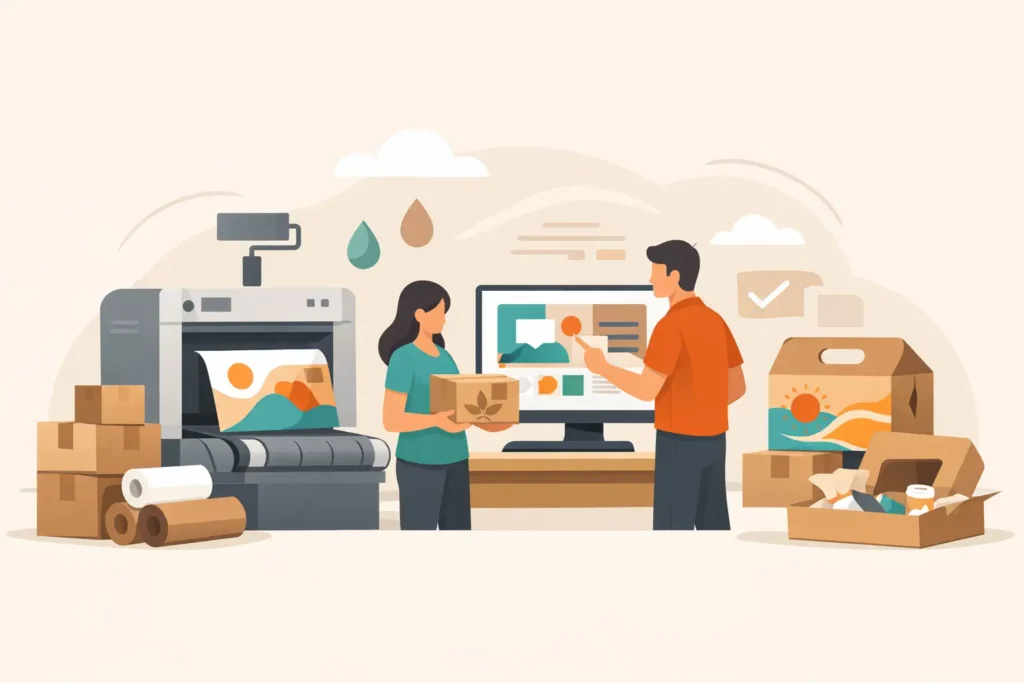
A plain brown box does the job until it starts costing you repeat sales, shelf impact, or time at packing benches. That is where cardboard custom printing earns its keep. For small brands, busy warehouses, food-service operators, and growing online stores, printed cardboard is not just about looks. It helps products travel, supports brand recognition, and makes everyday packing more efficient.
The key is getting the printing right for the way your business actually operates. A winery shipping mixed orders has different needs than a cafe sending takeout, and both are different again from an ecommerce seller using short production runs. Good packaging decisions come down to product type, print method, order volume, and how much flexibility you need when demand changes.
Why cardboard custom printing matters
Printed cardboard gives you more than a logo on a box. It tells customers what they are handling, helps staff pack the right stock faster, and gives your business a more finished presentation without needing expensive extras inside the carton. If you sell in-store, it can help products stand out on the shelf. If you ship direct to customers, it can make deliveries feel more deliberate and professional.
There is also a practical side that gets overlooked. Clear product names, handling notes, SKU references, or simple one-color branding can reduce mistakes in dispatch. For some businesses, that is more valuable than decorative printing. A custom carton that carries the right information in the right place can save time every single day.
That said, custom printing is not automatically the best option for every order. If your box sizes change constantly, if you are testing a product line, or if volumes are very low, it may make more sense to start with stock cartons and add labels or tape. The best result usually comes from matching the print investment to the life stage of the product and the rhythm of your ordering.
Choosing the right cardboard custom printing setup
Before talking about artwork, inks, or finishes, it helps to look at the basics. What are you packing, how is it shipped, and how many units do you actually need per run? Those three questions usually shape the job more than anything else.
If your cartons are used for freight, durability comes first. The board grade, box style, and print placement need to work around stacking, taping, and transport. Heavy ink coverage on the wrong surface can scuff. Fine detail may not reproduce well on rough corrugated board. In these cases, bold, simple artwork often performs better than complex design.
If your packaging is customer-facing at retail or handed directly to buyers, presentation matters more. Cleaner print surfaces, stronger color consistency, and better panel layout may be worth paying for. A mailer box for subscription products, gift packs, or boutique food items often needs a better visual finish than a transit carton moving pallet to pallet.
Volume matters too. Large runs can justify more setup because the unit cost drops over the full quantity. Small runs need a different kind of value. For many businesses, especially newer ones, the real advantage is being able to order printed boxes without committing to oversized quantities that tie up cash and storage space.
What to include on a printed cardboard box
Most businesses start with a logo, but that is only part of the picture. Good printed packaging uses the available space well. Brand name, product range, orientation marks, reuse instructions, and simple contact details can all be useful if they serve a purpose.
The best box designs are usually the simplest. On corrugated cardboard, clean lines and strong contrast tend to read better than crowded layouts. One or two colors often look sharper than trying to force in every brand element. If the carton is used for shipping, put the most important information where it stays visible after sealing and stacking.
Think about who handles the box before the customer sees it. Warehouse staff may need pack identifiers. Delivery teams may benefit from visible handling instructions. Retail staff may need a quick read on product type or quantity. Good print is not only external branding. It is part of the workflow.
Cardboard custom printing for small businesses
This is where many businesses hesitate, and fairly enough. Custom packaging has a reputation for being expensive, slow, and only suited to big order volumes. That can be true with some suppliers, but it is not the whole market.
Short-run cardboard custom printing makes more sense than ever for smaller operators. If you run an online store, local bakery, bottle shop, cafe, or specialty retail business, you may not need thousands of identical cartons sitting in storage. You may just need a practical run of printed boxes that look professional and arrive quickly.
That flexibility matters when products change, seasonal ranges come and go, or you are still working out your best-selling sizes. Ordering smaller quantities reduces risk. It also gives you room to test. You can see how the print performs in transit, whether the size is right, and how customers respond before committing to a larger production run.
For that reason alone, no-minimum or low-minimum custom manufacturing can be a real advantage. It gives smaller brands access to packaging that used to be reserved for much larger businesses.
Common print choices and trade-offs
There is no single best print option for every cardboard box. It depends on budget, quantity, artwork complexity, and the board being used.
Simple one-color printing is often the most cost-effective place to start. It works well for logos, product names, handling marks, and straightforward branding. It is usually easier to read on corrugated surfaces and tends to hold up well in working environments.
More detailed printing can deliver a stronger visual result, but it comes with trade-offs. Costs may rise, lead times can change, and not every board grade is suited to high-detail graphics. If your box is mainly a shipping carton, those added costs may not return much value. If it is part of the customer experience, they might.
Finish is another factor. Matte and natural board surfaces can look clean and honest, which suits many food, beverage, and retail brands. Heavier coatings or highly polished effects may suit premium presentation better, but they are not always necessary. Practical packaging should still feel practical.
Getting better results from your artwork
The easiest way to avoid delays is to design for cardboard, not for a screen. Fine text, light colors, and packed layouts often cause trouble once they hit a corrugated surface. Bolder artwork usually prints better and reads faster.
Keep your key message limited. A strong logo, a simple brand line, and one or two useful details are often enough. If every panel is crowded, nothing stands out. Make sure important elements sit clear of folds, tape lines, and edges where they can be lost in production or packing.
It also helps to think in real box dimensions rather than flat artwork alone. A design may look balanced on a proof but feel awkward once the carton is assembled. Front-facing panels, top flaps, and side walls each do different jobs.
When printed cardboard is worth it
If your packaging is part of how customers recognize your business, if your team handles high order volumes, or if you want a cleaner presentation without adding more packing steps, custom printing is usually worth serious consideration. It can improve consistency, reduce labeling work, and make standard shipping cartons look more intentional.
If your operation is highly variable, if products are still changing fast, or if budget is the main pressure point, a staged approach may be smarter. Start with stock cartons. Add branded tape, labels, or stamped marks. Move into printed cartons once the sizing and demand are stable enough to support it.
That is often the most practical path. Not every business needs a fully printed box on day one. But once packaging becomes part of daily operations rather than an afterthought, the gains in speed, presentation, and consistency become harder to ignore.
For businesses that want both flexibility and a professional result, cardboard custom printing works best when it is treated as a working business tool, not just a branding exercise. Get the size right, keep the print clear, order what you can actually use, and choose packaging that helps the product arrive looking like it should.