


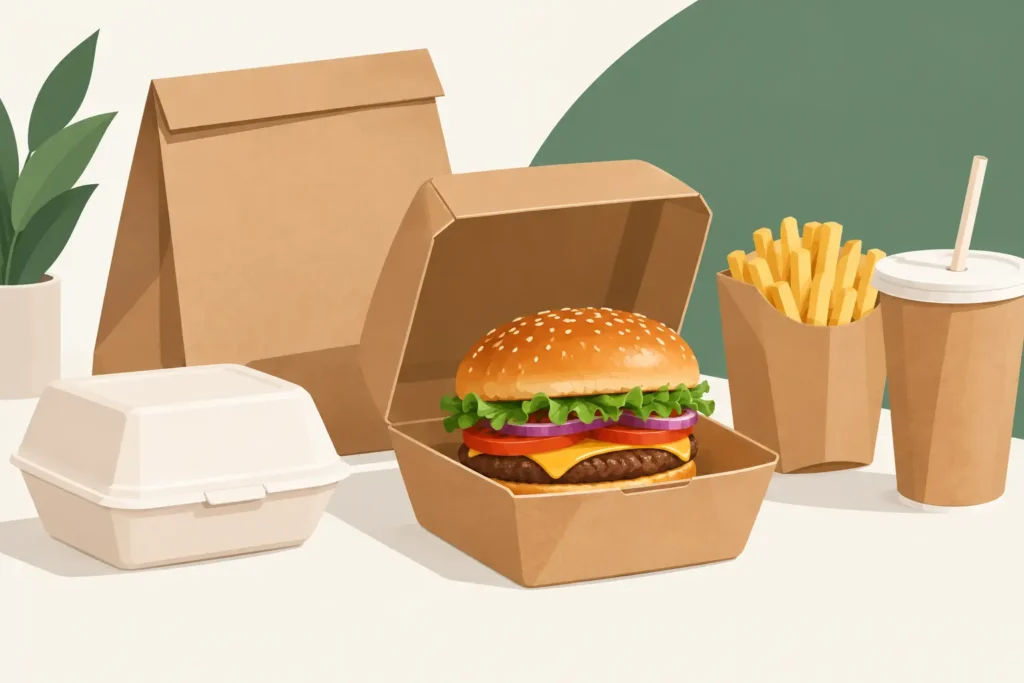
A burger can leave the grill looking perfect and arrive looking like a crushed, soggy mess 15 minutes later. The best takeaway packaging for burgers does more than hold food – it manages steam, protects the bun, keeps toppings in place, and gives customers a clean, easy way to eat on the go.
For burger bars, cafes, food trucks, pubs, and catering businesses, the right box also needs to work at speed. Staff should be able to pack it quickly during a rush, stack orders without guesswork, and hand over food that still looks worth the price.
Start With the Burger, Not the Box
There is no single burger box that suits every menu. A thin smash burger with a soft bun needs less internal space than a double patty burger loaded with onion rings, slaw, and sauce. Choosing a box that is too large lets the burger slide around. One that is too tight compresses the bun and pushes fillings out the sides.
Measure your finished burger at its widest point, including the bun and overhanging toppings. Then allow enough clearance for a sheet of greaseproof paper or a burger wrap if you use one. The aim is a close fit without squashing the product.
Height matters just as much as width. A shallow clamshell can work well for a classic single burger, but it is often the wrong choice for tall burgers, brioche buns, or burgers served with a skewer through the top. Deep burger boxes protect presentation and reduce the chance of sauce ending up on the lid.
The Best Takeaway Packaging for Burgers Balances Heat and Steam
Freshly cooked burgers create steam. If that steam has nowhere to go, condensation forms inside the pack. The bun softens, fries lose their crunch, and the customer opens a box that feels damp rather than fresh.
Vented cardboard burger boxes are often the most practical option for hot takeaway orders. Small openings allow steam to escape while the board provides enough insulation for a short trip home or to the office. They are especially useful when burgers are packed immediately after cooking.
That does not mean more ventilation is always better. For a longer delivery route in cold weather, too much airflow can let heat escape quickly. The right choice depends on travel time, the temperature of the food, and whether fries are packed in the same container.
For most businesses, it is better to pack burgers and fries separately. Fries release a lot of heat and moisture, which can affect the burger if both are sealed in one large box. Separate packaging helps each item arrive in better condition and makes portion control easier.
Cardboard Burger Boxes Are the Everyday Workhorse
Food-grade cardboard burger boxes are popular because they are affordable, simple to use, and easy to stack. They give burgers a firm outer layer of protection and offer a much more polished handover than wrapping a burger on its own.
Look for board that feels suitably rigid for your menu. A lightweight box may be fine for a small burger collected over the counter, while a heavier burger with extra fillings needs stronger walls and a reliable closure. Grease-resistant board or a greaseproof liner helps prevent oil from soaking through and weakening the pack.
A tuck-top burger box is a good all-round choice for busy service. It packs flat to save storage space, assembles quickly, and can be stacked for pickup orders. Clamshell-style boxes are also fast to close and can be useful when staff are working through a high volume of orders.
Plain kraft or white cardboard gives a clean, food-service look and suits almost any venue. Kraft has a casual, natural appearance that works well for cafes, burger trucks, and venues using recyclable-looking presentation. White boxes can look sharper for branded labels, stamps, or printed artwork.
Consider Grease Control Before You Order
Burger packaging needs to cope with more than the patty. Melted cheese, bacon fat, sauces, pickles, and buttered buns can all create grease issues. When oil reaches the outside of the box, it affects both appearance and customer confidence.
A greaseproof paper wrap inside the box is a practical extra layer of protection. It can hold the burger together during transport, reduce direct contact with the cardboard, and make the burger easier for customers to handle. It is particularly useful for saucy burgers or softer potato buns.
If you wrap the burger first, avoid wrapping it so tightly that steam is trapped against the bun. A loose wrap inside a vented box usually performs better than a tightly sealed parcel. Test the full packing method with a finished burger, not an empty box on a bench.
Also check how the packaging holds up after 20 to 30 minutes. Fill it with the actual burger, add hot fries if they are part of the order, close it, and leave it as though it were waiting for a delivery driver. This simple test quickly shows whether the board absorbs grease, the lid softens, or the burger shifts in transit.
Choose the Right Format for Your Service Style
Counter-service venues can often use a straightforward burger box because the food is eaten quickly. Delivery-focused businesses need more attention to stacking strength, heat retention, and tamper awareness. Caterers may need boxes that look presentable on a serving table as well as during transport.
The most common options each have a clear place:
- Standard cardboard burger boxes suit everyday takeaway, pickup, and short delivery runs.
- Deep burger boxes suit double stacks, loaded burgers, tall buns, and meals with substantial toppings.
- Clamshell burger boxes suit quick packing and simple service where speed is a priority.
- Burger wraps with an outer box suit messy or premium burgers that need extra grease control and a more secure hold.
For delivery platforms, think about how the pack travels inside a larger carry bag. A box that stacks cleanly is less likely to be crushed under drinks, fries, or other meals. Flat lids and firm corners make a real difference when several orders leave at once.
Do Not Let Packaging Make Service Slower
A well-priced burger box is not a saving if it is awkward to assemble in the middle of lunch service. Before committing to a large quantity, have staff fold, fill, close, and stack the packaging during a normal shift. If tabs catch, lids pop open, or the box requires two hands to close, it may cost more in time than it saves in unit price.
Flat-packed boxes save room in a storeroom, but they need to be quick to fold. Pre-formed containers are faster to use but take up more storage space. The better option depends on your kitchen layout, order volume, and how much room you have near the pass.
Ordering a few compatible sizes can also simplify operations. For example, use one standard size for regular burgers and one deeper size for loaded or double burgers. Too many box sizes create picking errors, slow down training, and complicate stock control.
Branding Should Not Get in the Way of Function
A plain box with a clear branded sticker can be a smart starting point for smaller operators. It keeps ordering simple and lets you update promotions or menu messaging without holding outdated printed packaging.
When your menu and order volumes are established, custom printed burger boxes or carry bags can give every order a more consistent look. Keep the print practical. A logo, business name, short message, and contact details are often enough. Heavy ink coverage can add cost without improving the customer experience.
Able Packaging can help businesses combine stock food-service packaging with short-run custom options, which is useful when you want branded presentation without committing to a warehouse full of boxes. The best custom packaging still needs to close properly, resist grease, and protect the food first.
Buy for Real Demand, Not Just the Lowest Unit Price
Price matters, especially when packaging is used with every order. But the cheapest box can become expensive if it fails during delivery, needs extra wrapping, or leaves customers with a poor impression of the food.
Compare carton quantities, storage space, and how quickly you use each size. Buying in volume can reduce the unit cost, but only when you have the room and turnover to keep stock clean and dry. Cardboard stored near moisture or grease can lose strength before it ever reaches the kitchen.
Keep enough stock to cover busy weekends, promotions, and supplier lead times. It is also worth holding a backup option that can handle most burgers if your preferred size runs low. Running out of suitable boxes during a service is a problem no kitchen needs.
The right burger packaging should disappear into a good customer experience. It holds the order together, keeps the food presentable, and lets the burger do what it is meant to do: arrive hot, intact, and ready to eat.