


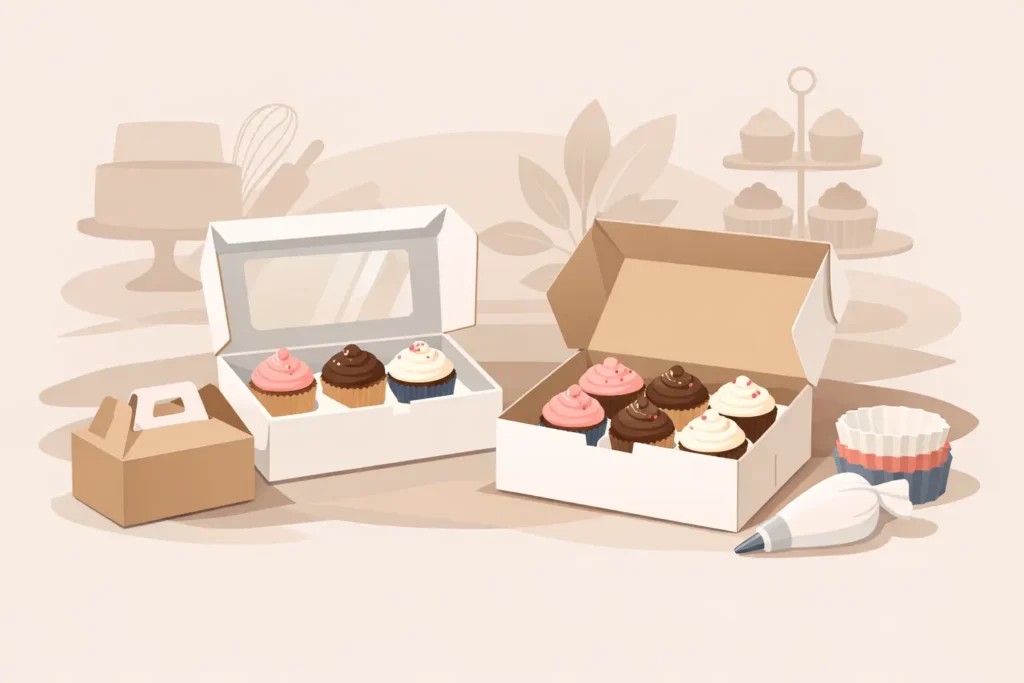
A cupcake that looks perfect on the rack can turn into a mess by the time it reaches the customer. Frosting shifts, toppings slide, and soft boxes sag if they are not matched to the product. That is why choosing the right bakery boxes for cupcakes is not a small detail. It affects presentation, food protection, delivery performance, and how much waste you end up paying for.
For bakeries, cafes, home-based cake businesses, and event suppliers, the best box is usually the one that fits your actual workflow. Not the cheapest unit on paper, and not the fanciest option either. The right choice depends on how far the cupcakes travel, how delicate the decoration is, whether you need window display appeal, and how often you are packing single orders versus bulk trays.
What good bakery boxes for cupcakes need to do
Cupcake packaging has a simple job description, but it needs to do several things at once. It should hold the cupcake steady, protect icing and decorations, present the product neatly, and stay easy to stack, store, and assemble during a busy service period.
That last part matters more than many businesses expect. If your team has to wrestle with awkward folds or add extra packing just to stop movement inside the box, your packaging is costing you time as well as money. A box that works well in real trade conditions saves labor, reduces damage claims, and helps orders go out faster.
The ideal box also depends on the sales channel. Walk-in retail, local pickup, and courier delivery all place different demands on the packaging. A box that looks excellent in a bakery display case may not perform well in the back seat of a car or in a multi-stop delivery run.
Choosing bakery boxes for cupcakes by pack size
The first decision is the box count. Single cupcake boxes work well for premium treats, gifting, and café add-ons. They create a more individual presentation and can support a higher perceived value, especially when the cupcake has detailed finishing or seasonal decoration.
Two-pack and four-pack boxes are strong sellers for casual gifting and small household purchases. They are also a practical middle ground for bakeries that want to encourage multi-unit sales without pushing customers into a dozen every time.
Six-pack and twelve-pack formats are often the workhorses. They suit bakery counters, preorders, party pickups, and weekend trade. If you regularly sell by the half dozen or dozen, it usually makes sense to standardize around those sizes so staff can pack quickly and customers know exactly what to expect.
Larger formats can be useful for events and corporate orders, but there is a trade-off. Bigger boxes can become harder to carry and more prone to movement if the cupcakes are not secured properly. Once pack sizes increase, inserts become much more important.
Why inserts matter more than many buyers think
An insert is often the difference between a clean handoff and frosting smeared against the lid. It keeps each cupcake in place, limits tipping during transport, and helps maintain spacing so decorated tops do not touch.
If your cupcakes have tall swirls, toppers, or soft fillings, an insert is usually worth it. Without one, even a correctly sized box can allow too much movement. On the other hand, for very simple cupcakes sold over the counter and carried a short distance, some businesses may choose to skip inserts to reduce cost and packing time.
It depends on the product. Standard buttercream and flat-top cupcakes are more forgiving. High-domed frosting, edible images, and fragile garnishes are not.
Box material and construction
Not all cardboard performs the same way. For cupcakes, you generally want a food-safe boxboard or corrugated option that balances presentation with enough strength to protect the contents.
Lighter folding cartons can look clean and professional, especially for retail display. They are often a good fit when cupcakes are sold in-store or collected directly by the customer. They also store efficiently, which matters if space is tight behind the counter.
Corrugated styles offer better strength for transport and larger orders. They are useful when cupcakes are traveling longer distances, being stacked in transit, or packed alongside other catering items. The finish may be more functional than premium, but the added protection can easily justify that trade-off.
Window boxes are popular for a reason. Customers like seeing the product before opening it, and cupcakes are visual sellers. A window can help drive impulse purchases and make gift packs more appealing. The only caution is that you still need enough structural strength around the window area, especially if boxes will be stacked.
White, kraft, or printed?
White boxes are a safe all-rounder. They look clean, work for most branding styles, and suit wedding, birthday, and everyday bakery sales without much adjustment.
Kraft boxes give a more natural, handmade look. They are often used by smaller bakeries and food businesses that want a simple, warm presentation. They can be a strong fit for rustic branding, but frosting colors and fine details may pop less against kraft than they do against white.
Printed boxes make the packaging do more of the selling. If you want stronger shelf presence or a more branded customer handoff, custom printing can lift the result without changing the product itself. For smaller businesses, low-volume custom options are especially useful because they let you test branded packaging without committing to large runs.
Size is not just about fitting the base
A common mistake is choosing a cupcake box based only on the diameter of the cake base. That is only half the measurement. Height matters just as much, and often more.
If the lid presses into the icing, the box has already failed. Tall frosting, toppers, candles, and decorative picks all need vertical clearance. That may mean selecting a deeper box or avoiding certain window styles if they reduce usable height.
Internal dimensions also need to work with the insert if one is used. A loose insert inside a roomy box will not do much to stop movement. A box and insert need to be considered as one system, not as separate items.
Practical issues during transport and delivery
Cupcakes are lightweight, but they are not tough. Heat, sudden turns, uneven stacking, and hand-carrying all create risk. This is where practical packaging decisions pay off.
If most of your orders are pickup, prioritize easy carrying and clean presentation. If you offer delivery, focus more on rigidity and product restraint. That can mean stronger board grades, secure inserts, and box styles that close firmly without popping open.
Stackability matters too. During busy periods, bakery teams often have multiple orders waiting for collection. Boxes that stack neatly help protect finished goods and keep bench space organized. Poorly designed lids or overfilled window panels can make stacking unstable, which creates avoidable damage.
Temperature is another factor. Packaging will not solve a heat problem on its own, but a well-fitted box reduces movement when frosting softens. In warmer climates or summer peaks, this margin can make a real difference.
Cost control without false savings
Most buyers want to lower packaging spend, and that makes sense. But the cheapest bakery boxes for cupcakes are not always the lowest-cost option once you factor in damage, repacking, and wasted labor.
A box that collapses under light stacking, takes too long to assemble, or needs extra tissue or makeshift supports is costing more than its unit price suggests. Better packaging can reduce product loss and speed up service, which usually matters more than saving a few cents per order.
Standardizing where possible helps. If you can align your most common cupcake counts with a small number of box sizes, ordering becomes simpler and stock control gets easier. It also reduces the chance of staff grabbing a near enough option that does not actually fit the product well.
For growing businesses, it can make sense to keep reliable plain stock for everyday trade and add custom printed packaging for premium lines, gift packs, or seasonal promotions. That gives you flexibility without tying up cash in too many SKUs.
When custom bakery boxes for cupcakes make sense
Custom packaging is not only for large bakery chains. It can be a practical move for small businesses that want cleaner branding, a better gift presentation, or packaging that fits a non-standard product size.
If your cupcakes are taller than average, if you sell mixed dessert boxes, or if your branding relies heavily on color and presentation, custom sizing or printing may be worth considering. It can also help if your current stock boxes require workarounds that slow packing down.
This is one area where a supplier with both stock range and custom capability can save time. Instead of forcing your product into a close-enough box, you can match the packaging to how you actually sell. That is often the better long-term decision, especially for businesses building repeat trade. Able Packaging is one example of a supplier that can support both standard stock and shorter-run custom options without making small businesses overcommit.
What to check before you order
Before placing a carton order, test the box with your real product. Use your tallest frosting style, your heaviest topping, and your normal carry conditions. Close the lid, stack a few units, and see how they perform after a short trip.
Check assembly time as well. A box might look fine on a flat sample, then become frustrating during a Saturday rush. If your team packs dozens of orders in a short window, speed and consistency matter just as much as appearance.
It also helps to think one step ahead. If you plan to add seasonal toppers, gift sleeves, or branded labels, make sure the box format leaves room for that. Packaging should support growth, not limit it.
The best cupcake box is rarely the most complicated option. It is the one that protects the product, suits the way you sell, and keeps service moving when the orders start piling up. Choose with real handling in mind, and your packaging will do its job quietly, which is exactly what good packaging should do.